
Exclusive: Employment tribunal claim says worker lost his job after distributing leaflets throughout London officeGoogle is facing a legal challenge from an AI engineer who claims he was unfairly dismissed after he protested against its work for the Israeli government, in the latest sign of growing concern about the social and ethical impacts of AI.The engineer distributed flyers around Google DeepMind’s London offices, which read “Google provides military AI to forces committin
Google has disputed the allegations made by the former AI engineer in the employment tribunal claim.
Photograph: Dan Kitwood/Getty Images Google has disputed the allegations made by the former AI engineer in the employment tribunal claim.
Photograph: Dan Kitwood/Getty Images AI engineer says Google unfairly sacked him after he protested against work for Israel Exclusive: Employment tribunal claim says worker lost his job after distributing leaflets throughout London office Google is facing a legal challenge from an AI engineer who claims he was unfairly dismissed after he protested against its work for the Israeli government, in the latest sign of growing concern about the social and ethical impacts of AI.
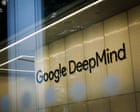
The engineer distributed flyers around Google DeepMind’s London offices, which read “Google provides military AI to forces committing genocide” and asking colleagues: “Is your paycheck worth this?” He also emailed colleagues about Google’s 2025 decision to drop a promise not to pursue weapons that harm people and surveillance violating international norms and urged them to unionise.
According to the claim filed with the UK’s employment tribunal, the worker alleges that Google discriminated against his belief that no one should be complicit in war crimes and that by emailing and leafleting colleagues he was acting as a whistleblower. He claims he was laid off in September following meetings with human resources after which Google concluded he had resigned, which he denies.
Google DeepMind disputed his account. A spokesperson said it “does not accurately reflect the facts”.
The engineer, who is of Palestinian heritage, told the Guardian that the job in a frontier AI research lab had been “a childhood dream” but his feelings changed as Google signed more deals. Requesting anonymity, he said he felt “terrible”, because “you were going in every day and you feel like you are, you’re betraying humanity and your people”.
It is understood that Google’s position is that it would not fire an employee for expressing opinions or engaging in constructive discourse in line with its company policy or treat unionised workers differently. He had urged colleagues to join United Tech and Allied Workers, a branch of the Communication Workers Union.
He is one of many Google workers worried about the multitrillion dollar company’s AI being used by national governments’ defence and intelligence operations. An insider at DeepMind said the 2025 change to Google’s AI principles fuelled staff concern.
“I know of at least 10 people who have quit as a matter of principle,” they said. “A lot of early AI researchers were idealistic about the idea of AI benefiting humanity – language the company liked to use. But when the AI really started working and the tech was worth real money they became dispirited at the less ethical uses to which it is now being put – and not a lot for the cure-for-cancer-type of problems.” Another insider said: “Many of us do not oppose the use of AI in the military in all cases, but oppose irresponsible use, or misuse by anti-democratic actors”. They said there were “very justified worries that AI can be a powerful technology to enable and empower authoritarianism, including in the US”.
There have been protests over Google and Amazon’s $1.2bn cloud computing deal with the Israeli government, which Israeli officials credited, during the Gaza conflict, with enabling “phenomenal things [to] happen in combat, which constitute a significant part of victory”.
Last month hundreds of Google workers also called for a bar on the US government using the company’s AI for classified defence work , saying they wanted the technology to be used to “benefit humanity” not “in inhumane or extremely harmful ways”.
However, Google signed an AI deal with the Pentagon after Anthropic declined to remove guardrails preventing its AI being used for autonomous weapons or domestic surveillance. Google said it was committed to the consensus that AI should not be used for such things “without appropriate human oversight”.
The employment dispute was launched amid growing signs of public resistance against AI. In recent weeks mentions of the technology have been met with boos at US college commencement ceremonies. Google’s former chief executive Eric Schmidt was booed by graduates at Arizona State University on Friday when he said AI will “touch every profession, every classroom, every hospital, every laboratory, every person and every relationship you have”. Polling in Great Britain released on Monday showed one in three university students fear AI will wipe out jobs so rapidly that it will lead to social unrest .
Rosa Curling, the co-executive director at Foxglove, a tech justice campaign group that is supporting the employment tribunal case, said of the ex-employee: “He tried to restore the ethical policies on conflict and surveillance which Google abandoned last year. Instead of listening to his warnings, the firm hit back against this important act of internal whistleblowing by sacking him.” Explore more on these topics Google AI (artificial intelligence) London Israel news Share Reuse this content