
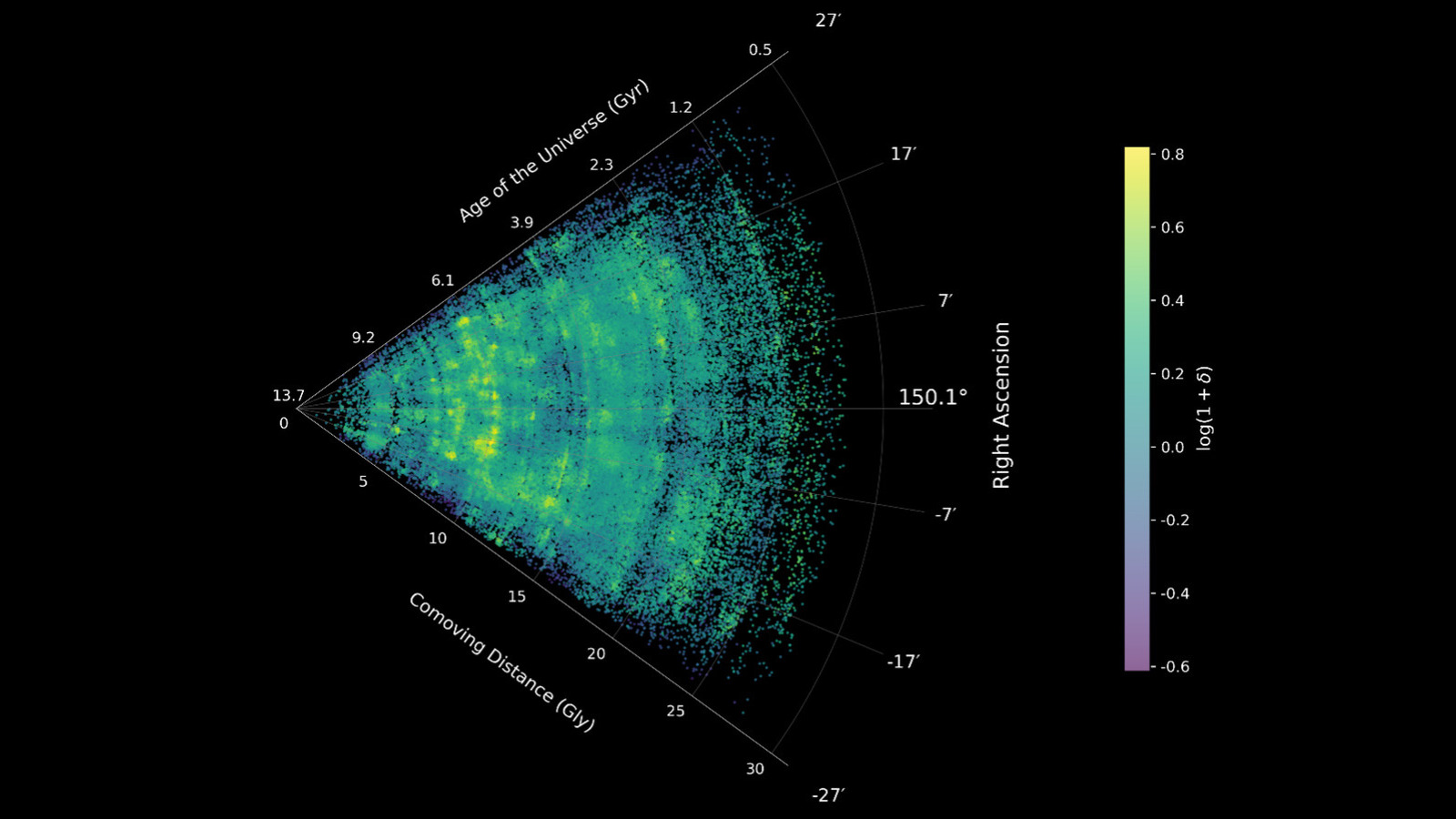
Adding significantly more detail means better future investigations into the universe's past.
Tomorrow Space Astronomers use the Webb telescope to improve our map of the cosmic web By Anna Washenko May 11, 2026 6:54 pm EST UCR/Hossein Hatamnia We love when astronomers share the images they capture with the James Webb Space Telescope because they are so dang beautiful and cool . But of course, science is about more than just pretty pictures. A research team has used the telescope to map out the cosmic web, a collection of dark matter, gas and filaments that connects larger entities in space. As the blog post from the University of California, Riverside describes it, the cosmic web "forms the underlying architecture of the cosmos, linking galaxies and clusters into a single, intricate, and far-reaching structure." Used the James Webb Space Telescope, this team has created the most detailed map to date of this foundational structure.
"The jump in depth and resolution is truly significant, and we can now see the cosmic web at a time when the universe was only a few hundred million years old, an era that was essentially out of reach before JWST," said Bahram Mobasher, UCR professor and an investigator on the study. "What used to look like a single structure now resolves into many, and details that were smoothed away before, are now clearly visible." "For the first time we can study the evolution of galaxies in cluster and filamentary structures across cosmic time, all the way from when the universe was a billion years old up to the nearby universe," according to lead author Hossein Hatamnia, a graduate student at UCR and Carnegie Observatories.
The academic paper covering the development of this survey was published in The Astrophysical Journal .