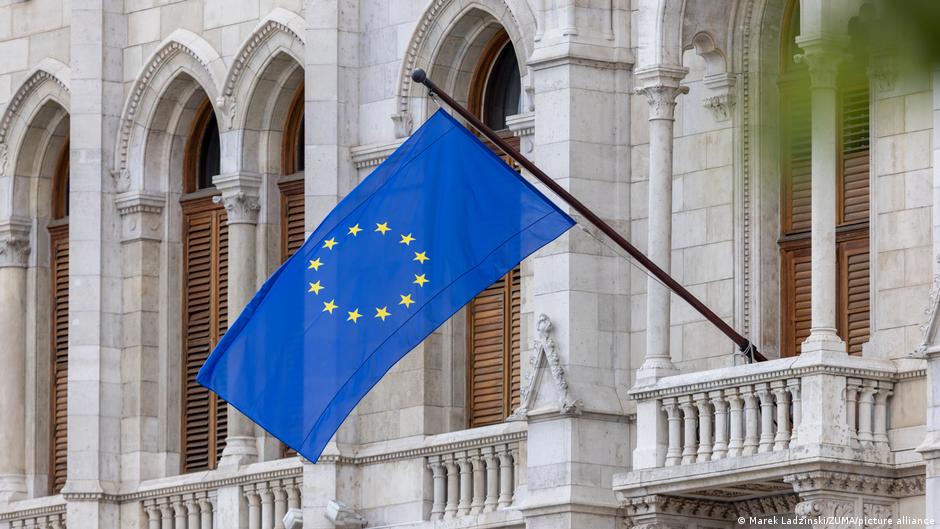
The EU reached a provisional agreement to remove import duties on US goods, keeping the bloc on track to meet Trump's deadline to avoid higher tariffs on European exports.
This kept the EU on track to meet President Donald Trump's July 4 deadline and avoid higher US tariffs on European goods.
"I am proud to announce that Europe has avoided a damaging escalation of transatlantic trade tensions and protected European companies, investments and millions of jobs on both sides of the Atlantic," Zeljana Zovko, the lead trade negotiator in the European People’s Party group on the US deal, said in an X post announcing the deal.
"Today, the European Union delivers on its commitments," Cyprus's Energy, Commerce and Industry Minister Michael Damianos, whose country holds the EU's rotating presidency, said in a statement announcing the deal.
"Maintaining a stable, predictable and balanced transatlantic partnership is in the interest of both sides," he said.
What do we know about the US-EU trade deal?
The US-EU trade deal was agreed upon in July last year , after months of tariff uncertainty. Here are some of the most important things to know about it: The agreement imposes a 15% US tariff on most EU exports The EU pledged €514 billion ($596.3 billion) in investment into the United States, its largest trading partner The deal reduced the 25% tariff imposed on European automakers in April 2025 Before President Donald Trump's second term, the tariff on European autos stood at 2.5% The agreement helps the EU avoid a broader trade war that could hurt business confidence and consumer spending on both sides of the Atlantic Several European political and business leaders criticized the deal as harmful to the 27-member bloc The EU had initially pushed for a lower 10% tariff rate In February, EU lawmakers delayed approval of the deal amid uncertainty over Trump's tariff policies The delay followed a US Supreme Court ruling that struck down many of Trump's earlier global tariffs Trump later imposed a new blanket 15% tariff in response to the court ruling How had the leaders reacted?
After reaching the agreement last year, European Commission President Ursula von der Leyen had then told reporters that the new tariff rate was "a good deal," adding it would return "stability" and "predictability" to transatlantic trade.
She cautioned that "15% is not to be underestimated, but it is the best we could get.
" German Chancellor Friedrich Merz had also echoed that sentiment, calling the agreement a means to "preserve our core interests" and avert "an unnecessary escalation in transatlantic trade relations." He, however, had admitted disappointment over the outcome, stating, "I would have very much wished for further relief." Trade Reset: How Europe is replacing China and the US To view this video please enable JavaScript, and consider upgrading to a web browser that supports HTML5 video Edited by: Rana Taha