
Google is bringing its AI-detecting feature to more of its products to make it easier for people to verify if something was generated or edited with AI.
News AI Google's Circle to Search feature can tell you if an image was AI-generated The company is expanding SynthID to Chrome and Search.
By Karissa Bell May 19, 2026 1:45 pm EST Google As Google introduces new models and tools for generating AI content, it's also making it a little bit easier for people to answer the question "was this created with AI?" The company is expanding its AI detection system SynthID so features like Circle to Search and Lens will be able to identify AI-generated and AI-edited images.
SynthID is Google's homegrown watermarking system that appends invisible metadata to content created or modified with its own AI tools. Last year at I/O, the company debuted a dedicated SynthID detector and later integrated the feature into the Gemini app . Now, Google is expanding those AI detection capabilities to Google Chrome and Search too.
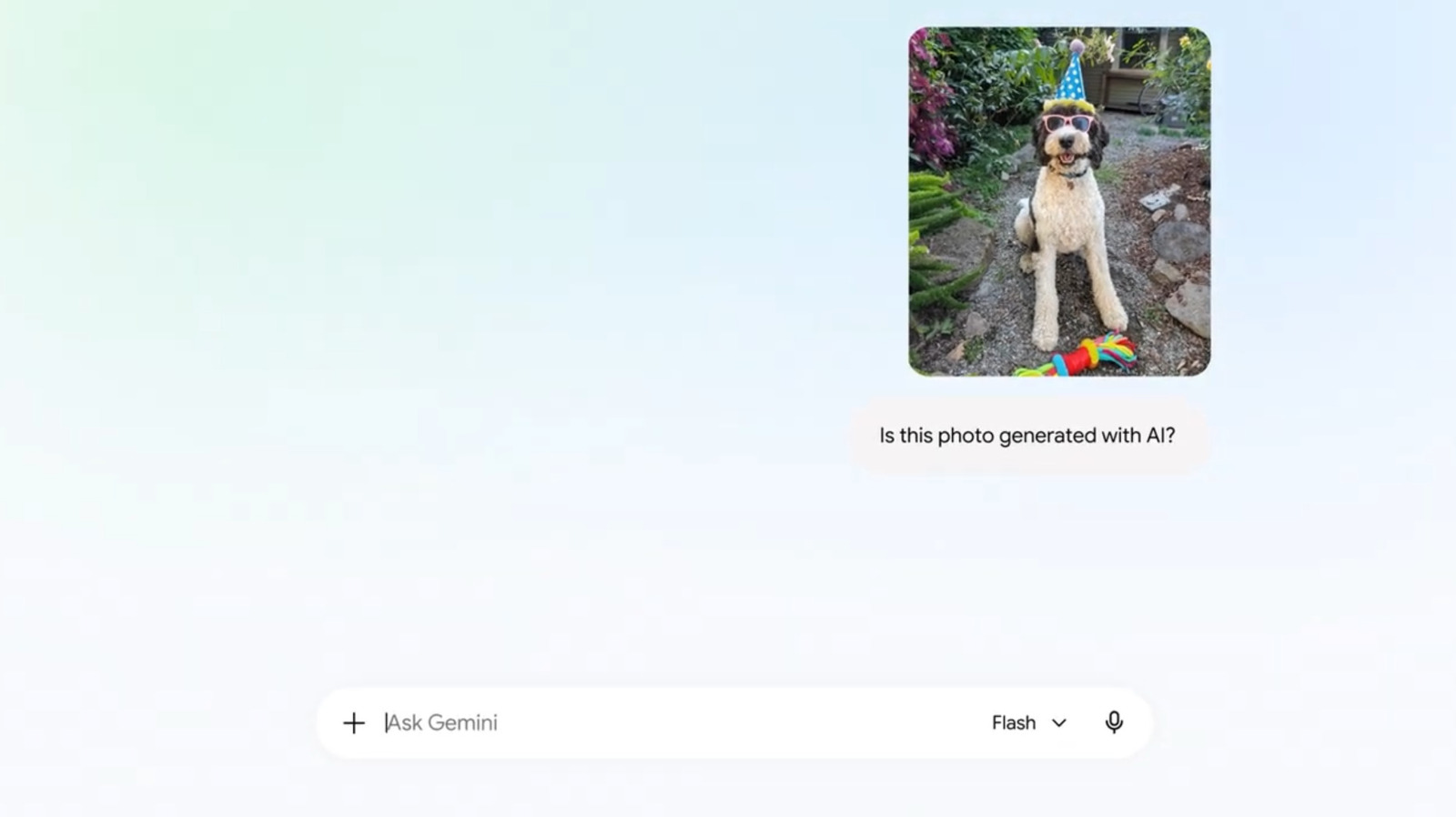
With the update, users will be able to use SynthID to assess an image's origin through a number of methods. On Android, Google's Circle to Search will be able to flag AI content. Google Lens and Chrome's version of Gemini will also be able to answer queries like "is this AI generated?" According to Google, these tools will be able to provide granular detail about a given image. In one example shared by the company, Google specifies that a given image was originally captured from a Pixel phone and later edited with AI-enabled tools in the Google Photos app.
Google That said, Google won't be able to provide such granular detail about every potentially AI-altered image you're likely to come across. The company added content credentials (a separate, industry standard watermarking system) to the native camera app in the Pixel 10 lineup and is now expanding the tech to its Pixel 8 and 9 models. But while Google has very good info about the provenance of images captured and edited via its own tools, it may not be as reliable when it comes to flagging content that originated on other AI platforms.
On that front, Google says OpenAI, Kakao and ElevenLabs have committed to bringing "SynthID technology to more of their AI-generated content." In a blog post, OpenAI said its integration would start with images created with "ChatGPT, Codex, or the OpenAI API." Google is also broadening support for content credentials, which should also make AI detection feel a bit more universal. The Gemini app is set to get content credential support beginning today, with integrations in Chrome and Search expected in the "coming months." Of course, no AI watermarking system is foolproof and there are myriad ways that people can evade detection tools and watermarks. But at a time when AI-generated content is getting more convincing and ubiquitous, making it easier for people to double check what's in front of them is a useful first step.