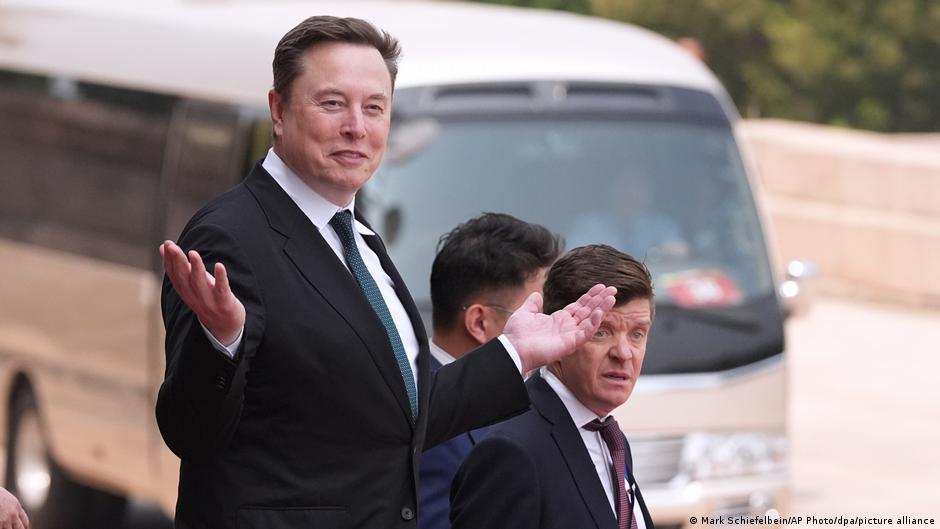
Elon Musk took on Sam Altman, accusing him of betraying OpenAI's original nonprofit mission.
In the civil lawsuit heard in a federal court in Oakland, California, Musk accused Altman, OpenAI president Greg Brockman and the company itself of abandoning its original mission to benefit humanity and instead becoming a for-profit corporation.
What do we know about the jury's decision against Musk?
The jury, which deliberated for only two hours before returning its verdict, served in an advisory role and found that Musk missed the statute of limitations deadline.
Judge Yvonne Gonzalez Rogers accepted the nine-person jury's unanimous verdict and dismissed Musk's claims.
Following the verdict, Musk's lawyer said he reserved the right to appeal.
Judge Rogers suggested that an appeal might be tricky, as Musk suing after the statute of limitations had run out was a factual issue.
"There's a substantial amount of evidence to support the jury's finding, which is why I was prepared to dismiss on the spot," the judge said.
The trial was widely seen as a critical moment for the future of AI in general and OpenAI in particular, raising questions about how the technology should be used and who should benefit from it.
AI and privacy: ChatGPT conversations found on Google To view this video please enable JavaScript, and consider upgrading to a web browser that supports HTML5 video Musk takes aim at federal judge Musk, in a post on his social media platform X, described the ruling as a terrible precedent and accused the judge of using the jury as a fig leaf.
"She just handed out a free license to loot charities if you can keep the looting quiet for a few years!" he wrote.
What do we know about this high profile Musk vs. Altman trial?
OpenAI, the creator of ChatGPT, was founded as a nonprofit in 2015 by several entrepreneurs, including Musk and Altman. The organization established a for-profit subsidiary in 2019.
In the lawsuit, Musk accused Altman, Brockman and OpenAI of abandoning the nonprofit mission in favor of commercial interests.
OpenAI countered that Musk, who now runs rival AI company xAI and its Grok chatbot, was motivated by petty revenge. The company said Musk filed the lawsuit only after failing to gain majority control of OpenAI's commercial entity.
Musk was seeking about $150 billion in damages from OpenAI and co-defendant Microsoft , a major OpenAI investor. The money would have been paid to an OpenAI nonprofit.
Musk's legal case also demanded that OpenAI revert to nonprofit status, a move that would have affected its position in the global AI race against rivals including Anthropic, Google and China's Deepseek.
He also sought the removal of Altman and Brockman from their roles.
How have OpenAI, Microsoft reacted to the verdict?
OpenAI lawyers embraced each other after the verdict.
Microsoft, which faced an aiding and abetting claim, welcomed the jury's decision.
"The facts and the timeline in this case have long been clear and we welcome the jury’s decision to dismiss these claims as untimely," a Microsoft spokesperson said in a statement.
OpenAI lawyers embraced each other after the verdict.
Is AI the new weapon of mass data theft?
To view this video please enable JavaScript, and consider upgrading to a web browser that supports HTML5 video Edited by: Louis Oelofse