NASA’s Magnetospheric Multiscale (MMS) mission has collected more than ten years of data from this zone – more than scientists can analyze alone. As Shock Detectives, you’ll help sort the chaotic from peaceful regions of the data, giving researchers a crucial set of clues.
2 min read NASA’s New Shock Detectives Project Invites Volunteers to Help Study Solar Wind NASA Science Editorial Team May 19, 2026 Article The Sun sprays an extremely fast stream of charged particles called the solar wind. At approximately 56,000 miles (90,000 kilometers) in front of the Earth toward the Sun, the solar wind collides with the Earth’s protective magnetic field, generating a long-lasting shock wave that stretches for hundreds of thousands of miles. Now, you can help scientists examine data about this “ bow shock ” to better understand how the solar wind affects the Earth by joining a new research project: Shock Detectives.
At this enormous shock wave boundary, the ever-changing magnetic field can either make the solar wind messy and dynamic (“chaotic”) or leave it smooth and stable (“peaceful”).
When "chaotic" plasma dominates, more energy can reach Earth's magnetosphere, possibly leading to disruptions in GPS signals, communications, and power grids. Scientists don't yet fully understand when the plasma changes between "peaceful" and "chaotic" states or how those changes affect energy transfer to Earth.
You can help solve this mystery. NASA’s Magnetospheric Multiscale (MMS) mission has collected more than ten years of data from this zone – more than scientists can analyze alone. As Shock Detectives, you’ll help sort the chaotic from peaceful regions of the data, giving researchers a crucial set of clues.
The value of this new knowledge doesn’t end at Earth – what scientists learn about the Earth-Sun bow shock will help them understand how the solar wind of other stars impacts their orbiting planets. Your contributions may help take Shock Detectives ‘out of this world’!
This project is closely connected to another NASA-supported project, Space Umbrella , which also relies on MMS data and imagery. While Space Umbrella focuses on the broad boundary between Earth’s magnetic shield and the surrounding solar wind, Shock Detectives zooms in just outside that boundary on the transition region, which can be upwards of 10 miles (17 kilometers) in thickness, to better understand how plasma behaves near the shock. Together, these efforts build a more complete picture of Earth’s space environment.
Join Shock Detectives and help crack the case here: https://science.nasa.gov/citizen-science/shock-detectives/ Want a quick overview? Check out the introduction video .
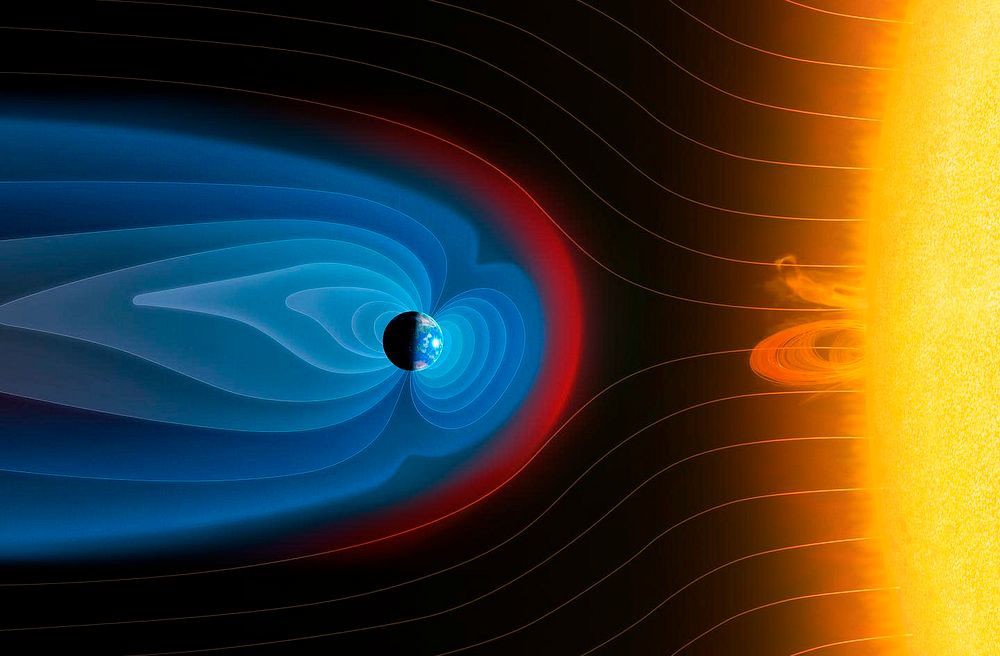
The Earth's magnetosphere (blue) interacts with the solar wind,, creating a shock wave (red), like a sonic boom in space. Join the Shock Detectives project and help scientists study this region and better understand how the solar wind affects our lives Mark Garlick/Science Photo Library via Getty Images