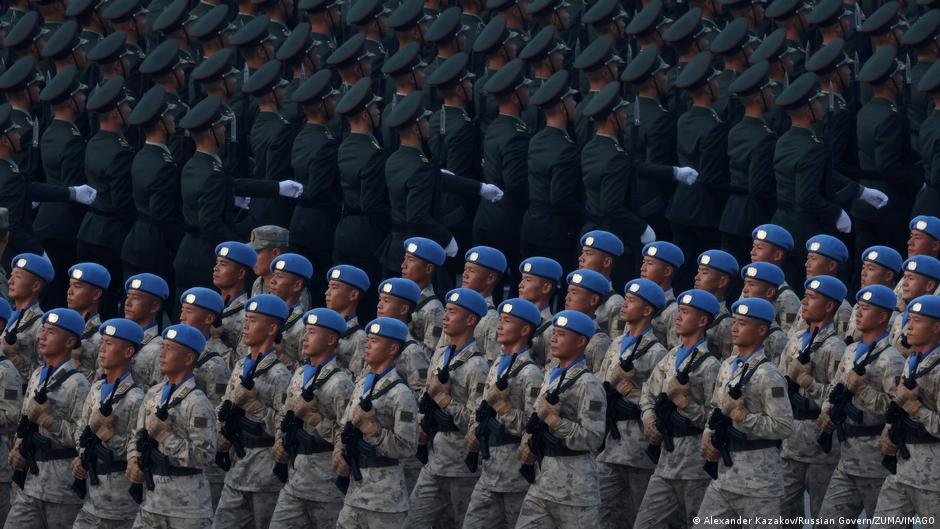
A "perfect storm" of falling troop numbers, geopolitical tensions and funding crises is jeopardizing international peacekeeping efforts, a new study has warned.
Missions managed by the United Nations have been particularly affected, a SIPRI study said.
The analysis found that just under 79,000 personnel were deployed in international peacekeeping missions at the end of 2025, its lowest point in 25 years and 49% lower than in 2016.
A 'perfect storm' "If things continue in this way, we could see a dramatic weakening of multilateral conflict management and the near-complete sidelining of institutions like the United Nations," said Jair van der Lijn, SIPRI's director of peace operations and conflict management programme.
"The result is likely to be more conflicts, and these conflicts are likely to have even graver impacts on civilians as states abandon long-established norms," van der Lijn added.
He said the peacekeeping crisis was "due to a perfect storm of funding, political and geopolitical factors." UN: 'Entire aid system has been hit by a wave of cuts' To view this video please enable JavaScript, and consider upgrading to a web browser that supports HTML5 video The UN has had to make " deep cuts to personnel numbers " after large donor countries failed to meet their financial commitments , SIPRI said, resulting in a $2 billion (€1.7 billion) funding shortfall.
Under President Donald Trump, the US has slashed its aid programs and looked to dial back its commitments to international organizations and institutions such as the UN and the World Health Organisation.
The study also said "hardline demands and veto threats from permanent members" of the UN Security Council had "complicated decisions on renewing operation mandates." As an example, it pointed to the US demanding an end to the UN's Interim Force in Lebanon (UNIFIL) despite repeated violations of a ceasefire between Israel and Lebanon.
"There is evidently widespread support for UN peace operations in principle," she said. "However, to sustain multilateral conflict management, states will need to go beyond expressions of support — they will need to provide predictable funding and create enough political space to enable effective multilateral responses." How USAID cuts are fueling Africa's humanitarian crises To view this video please enable JavaScript, and consider upgrading to a web browser that supports HTML5 video Edited by: Saim Dušan Inayatullah