Does travel insurance cover flight cancellations caused by the Iran war? Travelers could face major disruption as the jet fuel crisis threatens summer flights.
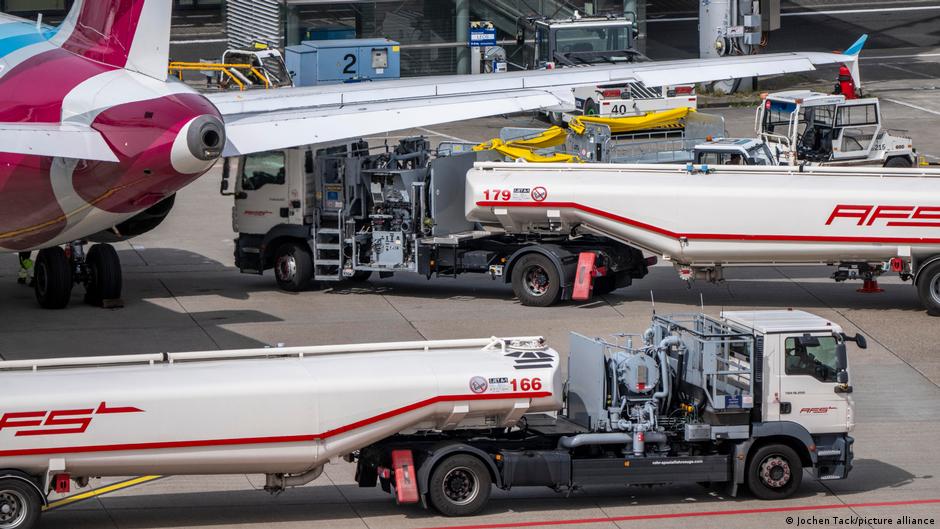
Airlines transfer price spike to passengers The jet fuel shortage is already affecting air travelers: Amid the sharp rise in kerosene prices, numerous airlines worldwide are passing at least part of the increased costs on to their customers. The erosion of passenger rights is illustrated by the Spanish airline Volotea: For several weeks now, its customers have expected a surcharge of up to €14 ($16.50), levied seven days before departure, depending on how kerosene prices develop. Volotea added a corresponding clause to its terms and conditions.
Facua — the Spanish consumer protection organization — considers this unlawful, accuses the airline of a lack of transparency in its pricing and has filed a formal complaint. "If this is not stopped quickly, there is a risk that other airlines could also commit similar violations," says Facua head Ruben Sanchez.
In anticipation of potential shortages, numerous airlines worldwide have already begun to scale back their schedules as a precaution.
Most recently, Lufthansa canceled 20,000 flights scheduled for the coming months.
What does this mean for affected passengers?
In the EU, passenger rights are regulated by the Air Passenger Rights Regulation In the European Union , the framework is clear. The Air Passenger Rights Regulation determines what airline customers can expect. "In the event of cancellations, passengers are generally entitled to compensation of between €250 and €600, depending on the flight distance," says the Saxony Consumer Advice Center. In addition, passengers are entitled to meals, hotel accommodation, and alternative transport.
The regulation applies to all flights departing from an airport within the EU, regardless of where the operating airline is based. For flights from a non-EU country to the EU, it only applies if they are operated by an airline based in the EU.
In "extraordinary circumstances," airlines are exempt from the obligation to provide compensation as defined in the EU Air Passenger Rights Regulation. Air traffic controller strikes or natural disasters constitute "extraordinary circumstances but whether a potential jet fuel shortage would hold up in court remains to be seen. "It all hinges on whether the airline has done everything within its power to operate the flight as scheduled," explains Kamila Kempfert, head of the Consumer Advice Center in Görlitz, Saxony. Whether compensation will actually be paid, depends on the specific case. Travelers should therefore carefully review their cancellation notice.
The US is less heavily affected by the jet fuel shortage On the other hand, the jet fuel shortage is likely to affect the US significantly less than other regions of the world, as its dependence on imports is much lower. According to the European Federation for Transport and Environment, supplies that are typically transported through the Strait of Hormuz account for around 30% of kerosene demand in the EU. Therefore, it is not surprising that average fuel costs per passenger have risen by €29 on inner-European flights and by as much as €88 on intercontinental flights since the start of the war. This is clearly reflected in higher ticket prices.
Advertisement