From petro-masculinity to electric trucks: why men disengage from climate action and what might bring them back.
He decided to trade a life of deployment, fighter jets and cruise missile operations for one of planting trees and sustainability .
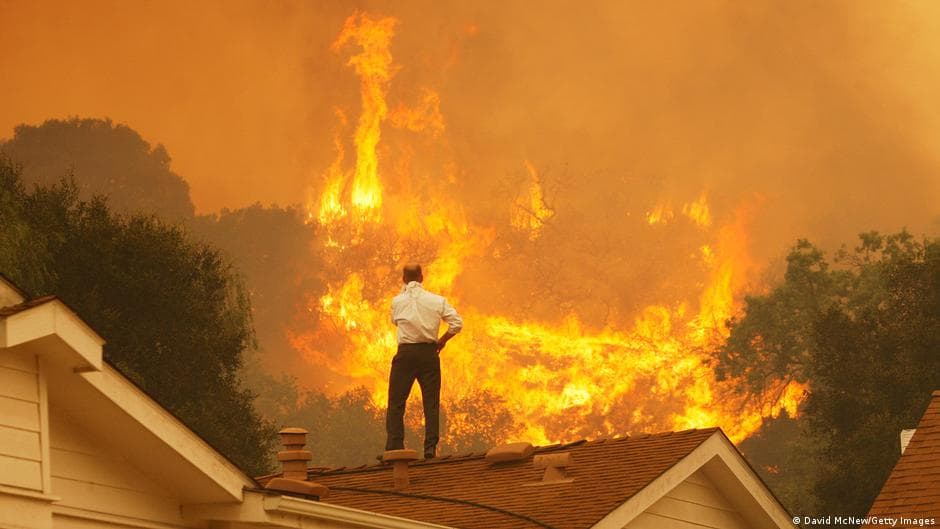
Though he didn't realize it at the time, the seeds for that change of pace and path were sown when he was just nine and watching a mega-fire burn through forest near his home in central Idaho.
The Lowman fire wasn't enormous by today's standards , but to a boy raised in the outdoors it felt apocalyptic. The blaze burned so fiercely it formed what looked like a nuclear mushroom cloud.
"It felt like the whole state was on fire at the time. It was just very, very memorable to me," Smith said.
"You know, when you go back to the place you grew up, you see all the things that have changed. And so what became jarring was seeing the thing that hadn't changed. It was just black, still black dirt, 22 years later." He started a company focused on post-fire reforestation for carbon offset production . He got involved in planting a couple of million trees and founded a climate tech company that helps businesses cut emissions.
Along the way, he became aware of more women in the climate space than men.
Do men and women relate to the climate crisis differently?
What Smith was seeing was not unique to his experience but is in fact a widely recorded phenomenon known as the green gender gap. In short, the idea that women are more concerned about the climate than men.
And as Amanda Clayton, a University of California political scientist found during her research on the topic, "the gender gap grows as a function of country wealth." As countries get richer, it is more likely that women will be the ones expressing greater concern about climate change. But not because they are suddenly more concerned.
"And when climate change becomes a political issue on the right, we see political and industry elites starting to promote climate-skeptical beliefs," Clayton said.
This might involve narratives that target men more than women. Messaging around being forced to give up gas-powered vehicles ; or the threat to jobs in the fossil fuel sector which is more male-dominated. In short, burning oil, gas and coal can become part of an identity sometimes referred to as petro-masculinity.
And as other recent research revealed, there is a direct link between climate change concerns and perceived threats to masculinity.
Different ways of talking climate to men Psychologist Vidar Vetterfalk is working to get underneath this thinking. In his role with MÄN, a Swedish organization that engages men and boys to challenge stereotypical masculinities, he asks groups of males to express what they like about the natural world and their worries for its future.
"That creates a connection," he said, rather than assigning guilt and blame for the climate crisis.
Connection, he says, is exactly what is missing in masculinity norms, and although the experience is hard for many participants, it is also appreciated.
"A lot of men share already after the first round that they've never spoken with other men in this way before or listened together with other men in this way before." Making climate action a mission While the kind of men who show up to such workshops are likely already somewhat interested in climate, reaching those who have never engaged can be more difficult.
"One thing, ex-fighter pilot, nobody ever gets to take my man card away," Smith said. "That gives me a little bit of room to maneuver when I'm talking about things that may be a little bit more traditionally coded as feminine." He also believes men are more likely to get interested in climate action if they see how it can improve their own lives — by installing solar or driving electric vehicles to save on fuel costs, for example. Seeing 'manly' men going green can also help to change thinking and behavior.
This is something car companies have also begun tapping into. Some are now marketing EVs as major man machines that can charge drills or become generators if a storm cuts off power.
"Most people, what they really need is a sense of purpose and drive and mission," he said. "I think that's maybe the key to where we can go with masculinity and climate." Edited by: Sarah Steffen This article was adapted from a DW Living Planet podcast. To listen to the full episode, click here .
Advertisement