The rapid rollout of renewable energy is helping to shift emissions trends, but expected temperature rises remain high as the UN moves to tighten countries’ commitments.
But a scientific paper published in April says that doomsday pathway — known as RCP8.5 and later SSP5-8.5 — is now less probable. Designed as a benchmark to help governments prepare for dangerous possibilities , the worst-case scenario was not a prediction.
Climate researcher Detlef Van Vuuren, lead author of the new paper, told UK-based climate science platform Carbon Brief that it had always been a "low-probability, high-risk scenario." It reflected the knowledge and energy trends of the late 2000s, when the world was more reliant on burning planet-heating coal, oil and gas.
But those trends have now changed .
The world is not heading toward the worst-case scenario "because we've actually taken political measures allowing us to move away from that," French climate scientist Christophe Cassou told the AFP news agency.
Friederike Otto, a climate scientist at Imperial College London, said the worst-case scenario had "assumed humanity would continue an unchecked coal-driven fossil fuel boom, which fortunately did not happen." While acknowledging that as "fundamentally good news," she urged that it "should by no means lead to complacency." Climate skeptics seize on revised scenario US President Donald Trump seized on the revision to claim climate scientists had been "wrong," fueling attacks on climate science from skeptics and politicians in both the United States and Europe.
The far-right Alternative for Germany is among them. The AfD used the new narrative to argue for a rollback of the country's climate policies during a parliamentary debate on Wednesday.
The message now is clear. As emissions have not fallen fast enough , despite years of warnings and climate pledges, the world could still warm by around 3 degrees Celsius by 2100.
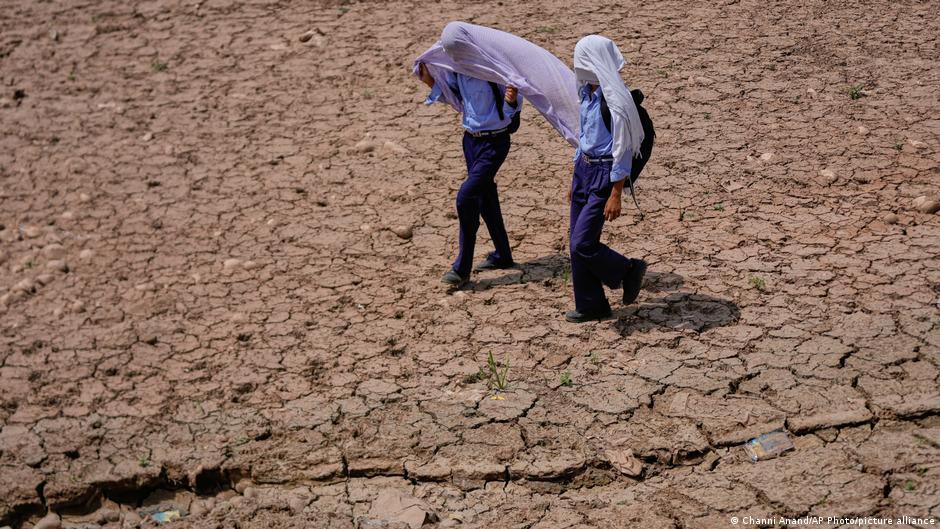
That would sharply intensify climate impacts already visible today, including increasing deadly heat waves, floods, storms and droughts. It would also imply widespread crop failures and sea-level rise affecting as many as 600 million people — all with widespread consequences on food security , economies and human health.
UN climate resolution faces resistance Meanwhile, the United Nations General Assembly has approved a nonbinding resolution reinforcing countries' obligations to combat climate change.
The UN body voted overwhelmingly in favor of endorsing the advisory opinion issued last year by the International Court of Justice . That ruling said countries could be violating international law if they fail to adequately protect people from dangerous planetary heating.
It is hoped that the resolution, spearheaded by Pacific island nation Vanuatu — which is already facing rising seas and intensifying storms — will strengthen the principle that governments have a legal responsibility to cut greenhouse gas emissions.
The approved text refers to the phaseout of subsidies for fossil fuel exploration, production and exploitation, and calls for damages to be paid by those in violation.
Edited by: Tamsin Walker