In the process, Colossal may have handed a useful tool to developmental biology.
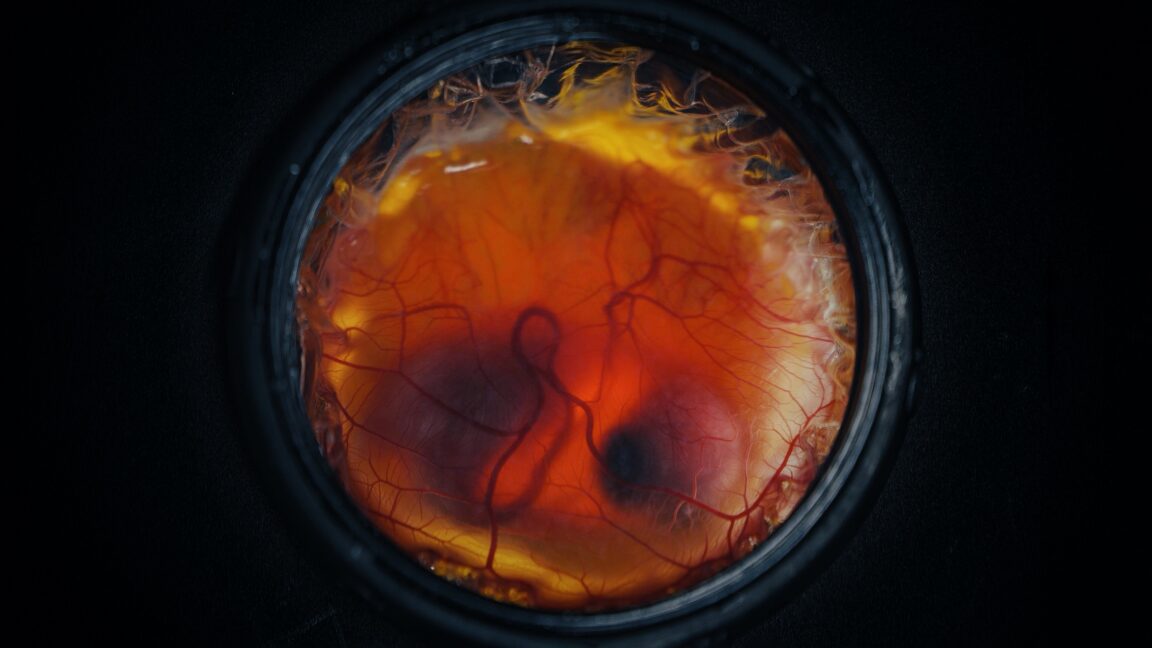
Story text Size Small Standard Large Width * Standard Wide Links Standard Orange * Subscribers only Learn more On Tuesday, biotech startup Colossal announced its newest development on the road to its announced goal: reversing the extinction of species, in this case, avian species. The development itself is essentially an artificial eggshell, one that allows almost the entire developmental process to occur without the shell. The company transferred the contents of eggs to their specially designed container within a day or two of laying and were able to have normal chicks walk away from it.
Beyond its potential utility for Colossal’s intended efforts, the work is personally interesting to me because it may solve a problem I faced in my research days. I’m going to start by describing the research problem that Colossal may have solved, before coming back to what it hopes to use its technology to do—and why the company still has a few key hurdles left to overcome.
Watching development For part of my career, I studied the development of vertebrates using chickens. While they’re less closely related to us than something like mice, the basics of their development are largely the same. And, unlike mice, they develop outside of their mother’s body. If you’re careful, you can chip away a hole in the egg, perform manipulations on the developing embryo, and then seal it back up with some tape. The chicken embryo will keep developing, allowing you to see the impact of what you’ve done on normal development.
Manipulations include everything from surgically removing key tissues to implanting beads soaked with signaling molecules to injecting DNA into cells to instruct them to make a different set of proteins. Any of these can alter the development of the embryo, telling us things about the factors that are normally required.
While this has been incredibly powerful, it provides us with a limited view of key events. That’s because you’re only allowed two time points: the moment you perform the manipulations, and when you stop the experiment. You don’t have a complete picture of how things change in between the two. You can repeat the experiment and stop things at different time points, but you don’t really get a complete picture of what is a dynamic process.
This is especially true because development involves a lot of motion: cells move around, tissues rearrange and slide past each other. For example, the spinal cord starts out as a flat plate of neural tissue, but then rolls up into a tube. As the cells mature into neurons, they detach from the inner surface of the tube, move to new locations, and start sending out axons to connect with other neurons.
There was a potential solution to this. A researcher down the hall ( Kat Hadjantonakis ) developed a microscope system that automated taking repeated exposures of embryos over time, allowing her team to track how cells moved about during key developmental processes. It worked, but only if you could get the embryo to survive in culture. This could work for a day or two with mouse embryos, but chickens were really difficult.
There were two big problems. The chicken embryo is embedded in the membrane that encloses the yolk, and the tension on the membrane provided by the yolk is needed for the embryo to develop properly. Let the yolk leak out and the membrane will sag, leaving the embryo a crumpled, disorganized mess. (Colossal told Ars that the curvature of the container it developed had to be tweaked to maintain the proper tensions within the egg’s membranes.) The other issue is that the embryo’s developing circulatory system extends deeply into the yolk. Most embryos I tried to image ended up being disorganized messes with no blood.
Development without the shell Colossal has basically solved that problem. It made a structural support that supports the entire contents of the egg in a way that keeps everything intact so that the embryo develops normally. No problems with a lack of membrane tension or the loss of blood. In fact, the transfer of the egg contents to Colossal’s new device can take place before the circulatory system even forms. (In the work they’re describing, transfers are done on day one of development, when the embryo is largely a smudge of cells on the surface of the yolk.) The support system is 3D-printed and lined with a special membrane that allows oxygen to be exchanged with the environment. Previous efforts to get this to work had to put the embryo in a high-oxygen environment, which increases the chance of DNA damage from reactive oxygen in the cells. The membrane is efficient enough that the embryo can develop in a normal atmosphere, though humidity has to be controlled. Colossal’s Ben Lamm told Ars that the only thing that needed to be added was calcium, as the embryo normally extracts a bit of that from the interior of the egg shell.
Colossal also confirmed that, due to density differences, the yolk naturally floats to the top of the container, with the embryo rotating to the top of that. So, once the egg is placed in this device, all the manipulations that biologists normally do should be possible. And, because it only requires a humidified chamber, it should be possible to film the embryo as it develops afterward and track any changes to cell movements and rearrangements. The company has even designed the container so that light can be diffused in from beneath for microscopy purposes.
In other words, Colossal seems to have solved a problem I no longer have (since I’m now a journalist) but is likely still an issue for biologists. However, the company did so purely as a necessary step for one of its de-extinction projects.
Not all eggs are created equal Why does it need to externalize the contents of eggs? It comes back to two of its planned de-extinctions, the dodo and the moa. Both of these species are far, far larger than the nearest related species. In the moa’s case, it’s far larger than any existing birds. If you want to make something that big, then there’s simply no way of taking an egg from an existing species and putting a moa embryo in it. So, one of Colossal’s next steps will be to see if it can supplement an egg—do things like add enough nutrients to the yolk to support the growth of a larger embryo.
This likely can’t be done before the embryo is in place, as simply pumping more material into the yolk would likely cause the membrane enclosing it to burst. Instead, they’re likely to have to add or exchange material as the embryo is developing.
The other issue they’ll have to contend with is the fact that embryonic development starts while the egg is still inside its parent. So the team will have two choices. One option is that they will need to figure out how to get the first half day or so of development to proceed without an egg, and then transfer that growing embryo into an egg. The alternative is that they’ll have to figure out how to fertilize eggs after their contents have been transferred to this device.
But some of those are challenges specific to de-extinction. For any researchers who think this could benefit their work, the company would be happy to hear from you. “I believe there will be labs that want to use this just for research purposes, which is awesome,” Lamm told Ars. “And by the way, we’re not going to charge for that. We’re going to just give it away.” John Timmer Senior Science Editor John Timmer Senior Science Editor John is Ars Technica's science editor. He has a Bachelor of Arts in Biochemistry from Columbia University, and a Ph.D. in Molecular and Cell Biology from the University of California, Berkeley. When physically separated from his keyboard, he tends to seek out a bicycle, or a scenic location for communing with his hiking boots.
8 Comments