Listen to this audio excerpt from Anton Kiriwas, senior technical integration manager for NASA’s Exploration Ground Systems Program: When Anton Kiriwas first spotted an image of the Moon and Mars hanging over a job fair booth while in college, it captured his imagination, yet felt like a dream too distant to chase. He had no […]
3 Min Read I Am Artemis: Anton Kiriwas Laura Sasaninejad Strategic Communications Specialist May 08, 2026 Article Listen to this audio excerpt from Anton Kiriwas, senior technical integration manager for NASA’s Exploration Ground Systems Program: 0:00 / 0:00 Your browser does not support the audio element.
When Anton Kiriwas first spotted an image of the Moon and Mars hanging over a job fair booth while in college, it captured his imagination, yet felt like a dream too distant to chase. He had no way of knowing that years later he would play a critical role in NASA’s Artemis missions, helping launch humans back to the Moon for the first time in more than half a century.
Kiriwas’ journey to NASA began during the Space Shuttle Program, while he was working for United Launch Alliance, the same organization behind the memorable Moon and Mars booth that he passed by in college. Not long after, he joined NASA as a civil servant, designing electrical systems that set him on a path toward his current role with Exploration Ground Systems as senior technical integration manager. In simpler terms, Kiriwas is a problem solver.
My official title is way too long – what I do is pretty simple: I solve problems for the ground systems. Our goal is to process, launch, and recover the spacecraft. There are a lot of ground systems that are used to go do that and a lot of people involved. A big part of my job is to go solve all the problems that come.
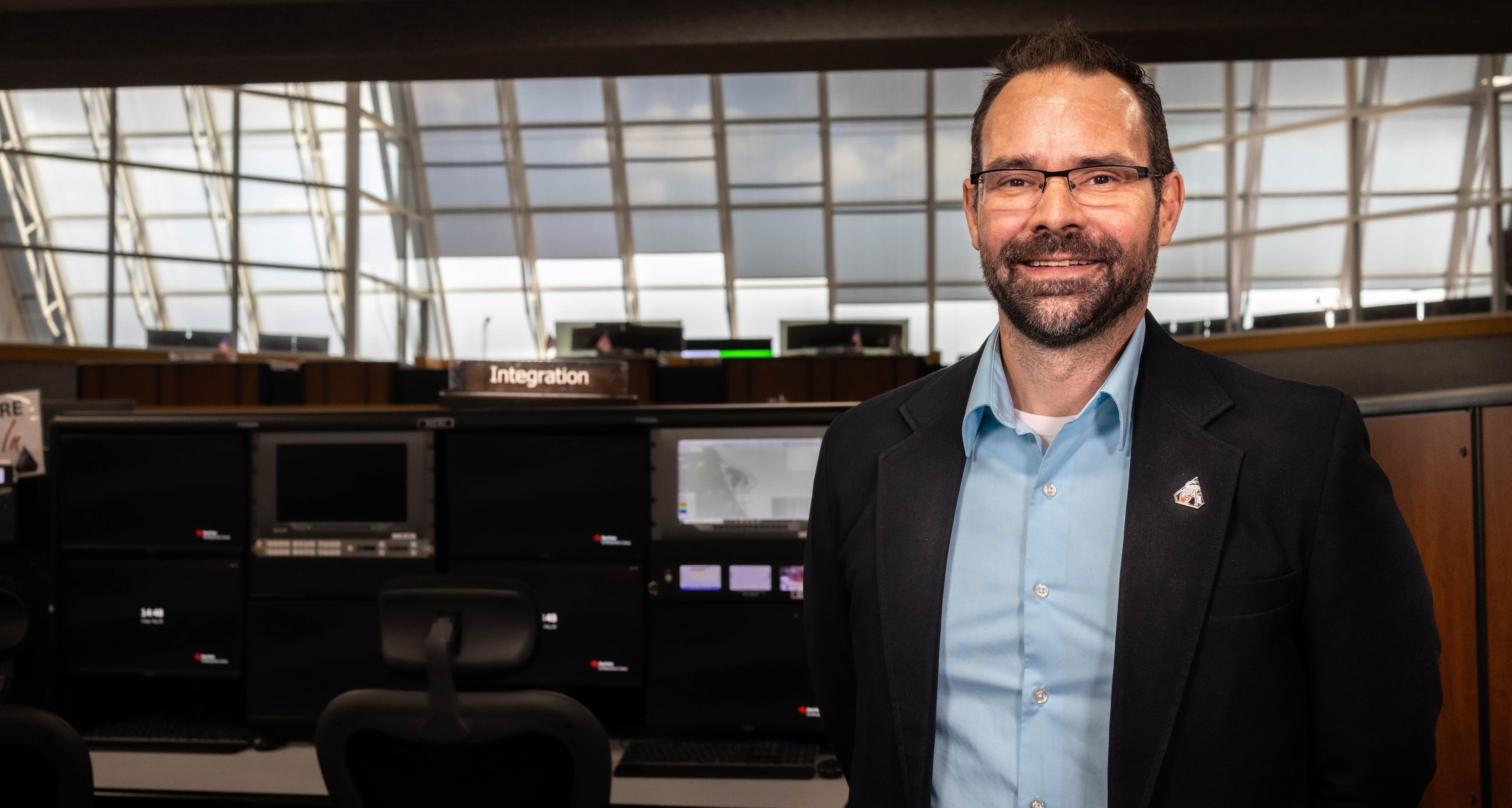
Anton Kiriwas Senior Technical Integration Manager, Exploration Ground Systems Program A core part of Kiriwas’s role is to serve as a launch project engineer. Strategically positioned at the integration console in the center of Firing Room 1 of the Launch Control Center at the agency’s Kennedy Space Center in Florida, he acts as a bridge for the test management and engineering teams. Kiriwas, along with the other launch project engineers, reports directly to the launch director, making the final technical recommendation on any issues that may arise during launch countdown. From this seat, he works across all engineering disciplines, united under one mission: launch the spacecraft and crew safely.
Anton Kiriwas, senior technical integration manager and senior launch project engineer with NASA’s Exploration Ground Systems Program participates in an Artemis II launch countdown simulation inside Firing Room 1 in the Launch Control Center at the agency’s Kennedy Space Center in Florida on Wednesday, Oct. 8, 2025. The simulations go through launch day scenarios to help launch team members test software and make adjustments if needed during countdown operations.
NASA/Glenn Benson Despite the intensity of launch day, Kiriwas describes it can often feel easier than the hundreds of rehearsals and simulations leading up to it. The team trains rigorously, preparing for every scenario imaginable. The ideal day is smooth and uneventful, but when it’s not, he and the team are ready.
I’m in my element when there is a problem.
Anton Kiriwas Senior Technical Integration Manager, Exploration Ground Systems Program When an issue arises, Kiriwas and his team begin asking the basic questions: ‘What are the requirements? Which systems are affected? Who needs to be involved?’ He pulls the technical community together to work through the situation, come up with any troubleshooting, and ultimately give the recommendation for a “go” or “no-go” for launch. It takes clarity, experience, and discipline, especially in moments when excitement is running high.
“There is adrenaline to get to launch, but you want to be careful to never let that turn into ‘launch fever,’” said Kiriwas. “We need to launch exactly when we’re ready and not a moment before.” Anton Kiriwas, a launch project engineer for the Artemis I mission, monitors operations from his position in Firing Room 1 as Artemis teams conduct a launch simulation for the Artemis I launch inside the Rocco A. Petrone Launch Control Center at NASA’s Kennedy Space Center in Florida on Oct. 27, 2022.
NASA/Ben Smegelsky With Artemis II complete, Kiriwas continues applying his problem‑solving expertise, analyzing lessons learned, and shaping future mission requirements. Artemis III hardware is currently being processed at NASA Kennedy, and the teams are carefully preparing the next steps of NASA’s return to the lunar surface.
“There’s a million little pieces that go into this, and I get to be a part of it,” said Kiriwas.
About the Author Laura Sasaninejad Strategic Communications Specialist Share Details Last Updated May 08, 2026 Editor Jason Costa Location Kennedy Space Center Related Terms Artemis Artemis 1 Artemis 2 Exploration Ground Systems I Am Artemis Kennedy Space Center Explore More 4 min read NASA Fuel Cell Tests Pave Way for Energy Storage on Moon Article 4 hours ago 3 min read NASA Welcomes Paraguay as 67th Artemis Accords Signatory Article 21 hours ago 3 min read Industry Moon Lander Training Cabin Lands at NASA for Artemis Article 24 hours ago Keep Exploring Discover More Topics From NASA Missions Humans in Space Climate Change Solar System