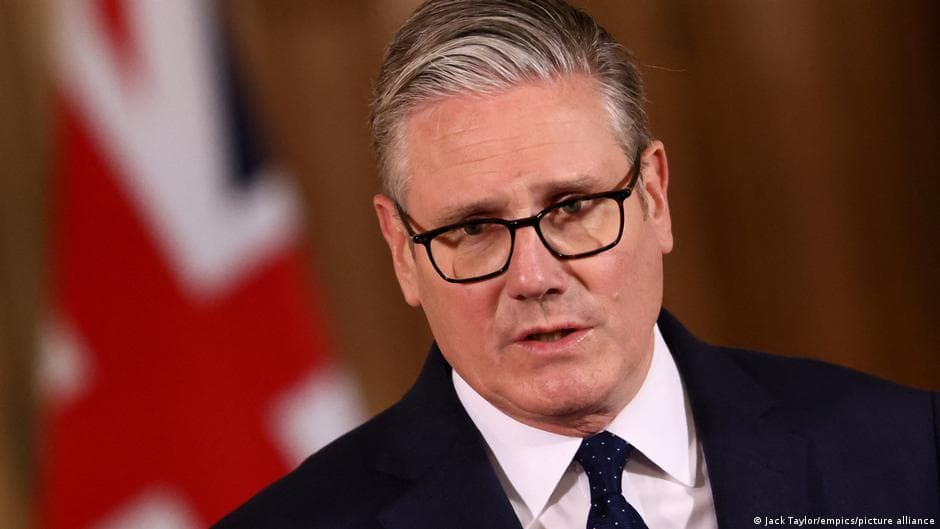
British Prime Minister Keir Starmer is meeting with his Cabinet amid continued pressure after election losses. A set piece speech yesterday failed to calm the waters, and a junior minister resigned early on Tuesday.
A major speech on Monday when Starmer said he was "not walking away" did little to calm the waters, and a junior minister in his government, Miatta Fahnbulleh, became the first to resign on Tuesday, urging Starmer to "set a timetable for an orderly transition." What did Starmer tell his Cabinet?
As his Cabinet convened mid-morning, nominally to discuss the reopening of parliament following the vote on Wednesday, Starmer's office was forced to issue another statement voicing his intention to remain in his post.
"The Labour Party has a process for challenging a leader and that has not been triggered," the statement from 10 Downing Street said.
"The country expects us to get on with governing. That is what I am doing and what we must do as a Cabinet," Starmer told his colleagues.
He noted that, "The past 48 hours have been destabilizing for the government and that has a real economic cost for our country and for families." The statement did not explicitly address or refute the notion of "an orderly transition," as some Labour rebels have suggested, over a longer period of time — addressing the immediate term instead.
How did we get here?
For those not following British politics closely, here's a quick recap of the past almost two years, from Starmer's Labour winning a massive majority in 2024 general elections to its woeful showing last week in Scotland, Wales, and on a local level in much of England.
July 4, 2024: Labour wins a huge majority, 411 seats, in general elections, ending 14 years of Conservative-led government Notably, though, the party only won 33.7% of the vote — one of its lowest vote shares of all time — winning as much by virtue of everybody else collapsing as its own popularity A series of policy U-turns, often amid criticism from Labour backbenchers, began to undermine the government's credibility and approval ratings One scandal in particular, the appointment and then sacking of Peter Mandelson as US ambassador repeatedly came back to haunt Starmer amid the release of the so-called Epstein files Reform on the populist right and the Greens on the populist left continued to gain momentum with the Conservative Party in the doldrums and Labour also losing popularity Nationalist parties in Scotland and Wales similarly regained momentum as Labour — the historical political powerhouse in both those countries — wobbled This culminated in major losses last week to Reform, the Greens, the Scottish National Party and Plaid Cymru in Wales in regional and local elections last week More to follow...
Edited by: Rana Taha Advertisement