US President Donald Trump flagged progress in talks with Iran, Tehran has warned that major gaps still stand in the way of dialing down the conflict.
The step forward comes as global pressure grows to avert a wider regional conflict, with mediators saying both sides are inching closer to a workable de-escalation plan.
What do we know?
US President Donald Trump told CBS News that the two sides were "getting a lot closer" to finalizing a deal.
He refused to give specifics about the plan, but said that "every day it gets better and better." In a separate interview with US news outlet Axios, Trump said the chance of an agreement was a "solid 50/50," while threatening to "blow them to kingdom come" if talks fail.
Earlier in the day, US Secretary of State Marco Rubio spoke of " slight progress" in negotiations, adding that "there might be some news a little later today," although it may come on Sunday or within "a couple of days." Speaking during a visit to India, Rubio also refused to rule out a resumption of US attacks on Iran if negotiations fail.
Iranian Foreign Ministry spokesman Esmaeil Baqaei, meanwhile, told state broadcaster IRIB that Tehran was in the final stages of drafting a framework for a deal, but said a final accord would take more time.
"Within a reasonable period of 30 to 60 days, the details of these points will be discussed and a final agreement will ultimately be concluded," Baqaei told IRIB.
He added that major gaps remain between both sides andthat an end to the US blockade of Hormuz be part of the framework. The blockade has halted Iran's oil exports, the main source of income for the Islamic Republic.
While Rubio restated US demands that Tehran hand over highly enriched uranium linked to Iran's controversial nuclear program, Baqaei insisted nuclear talks would not be part of the initial deal.
Also on Saturday, the Financial Times cited mediators as saying both sides were close to a deal on extending the ceasefire, which began on April 8, for 60 days. That deal would include a gradual reopening of Hormuz, the report said.
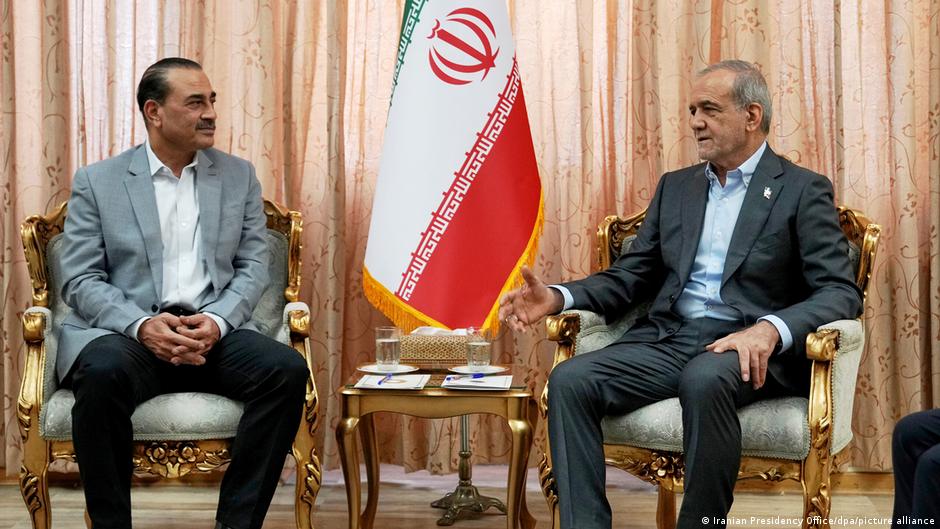
The hidden toll of the US-Israeli war on Iran To view this video please enable JavaScript, and consider upgrading to a web browser that supports HTML5 video Pakistan's top mediator visits Tehran The renewed optimism from both sides came hours after Pakistan's powerful army chief, Field Marshal Asim Munir, held talks with Iranian officials in Tehran.
A statement from the Pakistani army later said his meetings had been highly productive.
Islamabad has led negotiations that allowed a pause in the conflict as well as talks on reopening the Hormuz, which has been effectively shut to shipping since late February.
Before the war , the narrow strait, off Iran's coast, carried around a fifth of the world's oil and gas exports from the wider Gulf region. Oil prices, which soared at the outbreak of the war, remain elevated.
US media outlets Axios and CBS News reported that the White House is considering renewed strikes, while Rubio told NATO foreign ministers gathered in Sweden on Friday that there must be a "Plan B" in case talks fail.
In turn, Iran's chief negotiator Mohammad Bagher Ghalibaf vowed a "crushing" response from Tehran, warning Trump against "another act of folly," insisting that Iran's armed forces had been rebuilt during the initial ceasefire.
Edited by: Louis Oelofse Don't let the algorithm hide the news. If you rely on our team for trusted reporting, please take a moment to select us as your Preferred Source on Google by clicking here and hitting the "star" or "preferred" button , so you'll always see our verified news first.