
Deal follows others with Microsoft, Amazon, and more.
Text settings Story text Size Small Standard Large Width * Standard Wide Links Standard Orange * Subscribers only Learn more Minimize to nav SAN FRANCISCO—At its Code with Claude developer conference on Wednesday, Anthropic announced a deal with SpaceX to utilize the entire compute capacity of the latter’s data center in Memphis, Tennessee.
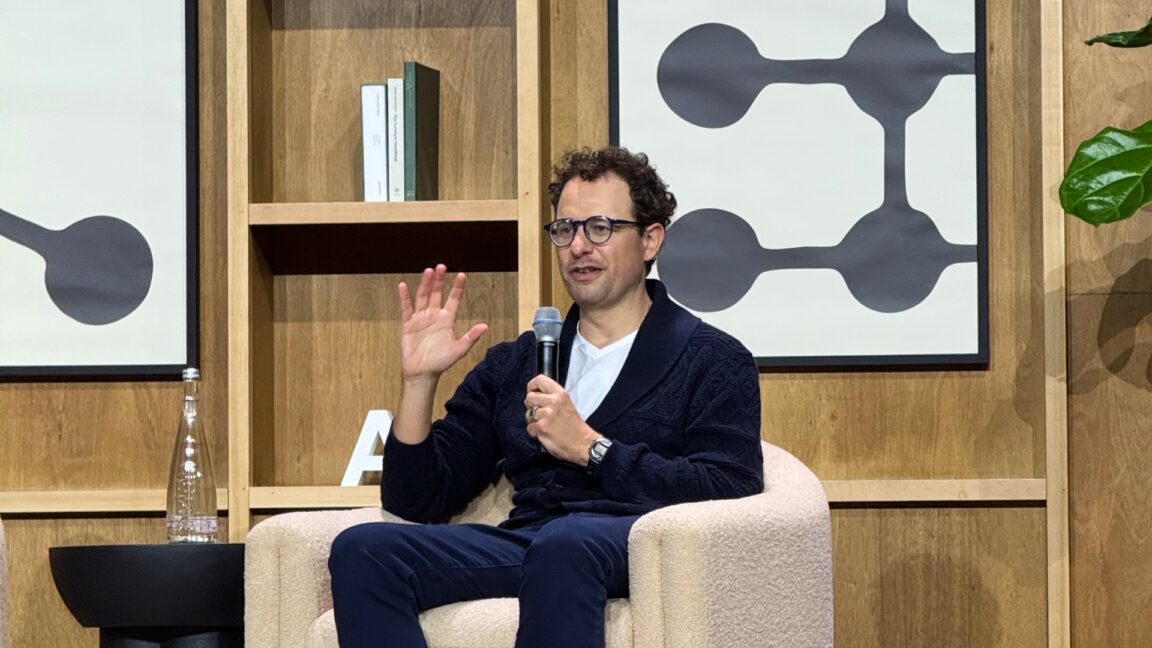
On stage at the conference, CEO Dario Amodei said the deal was intended to increase usage limits for Anthropic’s Pro and Max plan subscribers.
The announcement was accompanied by an increase in those usage limits; Anthropic doubled Claude Code’s five-hour window limits for Pro and Max subscribers, removed the peak-hours limit reduction on Claude Code for those same accounts, and raised API limits for its Opus model. The table below outlining the Opus changes was shared in the company’s blog post on the topic.
Opus usage limit changes on May 6, 2026.
Credit: Anthropic Opus usage limit changes on May 6, 2026.
Credit: Anthropic Anthropic claims the deal gives the company access to more than 300 megawatts of new compute capacity. For its part, SpaceX focused its announcement on the capability of the Colossus 1 supercomputer that’s at the center of the deal. “Colossus 1 features over 220,000 NVIDIA GPUs, including dense deployments of H100, H200, and next-generation GB200 accelerators,” SpaceX wrote .
Additionally, Anthropic “expressed interest” in working with SpaceX to build up “multiple gigawatts” of orbital compute capacity, tying into a recent (but unproven ) focus on exploring orbital data centers as an answer to the problem that “compute required to train and operate the next generation of these systems is outpacing what terrestrial power, land, and cooling can deliver on the timelines that matter.” The deal might be surprising to those who have followed Musk’s recent public comments—he was, until now, critical of Anthropic. For example, in February, he declared on X that “Anthropic hates Western Civilization,” while sharing a false tweet from Trump administration official Emil Michael about Anthropic’s practices with its constitution for Claude.
The tune changed with the deal—or in the lead-up to it, as Musk tells it. “I spent a lot of time last week with senior members of the Anthropic team to understand what they do to ensure Claude is good for humanity and was impressed,” Musk tweeted on Wednesday. “No one set off my evil detector.” Exploding demand amid constrained compute supply Anthropic has seen a significant increase in demand over the past few months for Claude Code and other products related to its models. The increase has been driven partly by users who are moving away from OpenAI after controversy over its agreements with the United States military, increasing adoption of Claude Code in professional software development organizations, and a user behavior (and product) shift away from single-agent, chat-based tasks to more demanding multi-agent workflows.
The company has made controversial moves lately to address demand outpacing available compute capacity amid outages and other problems. That included introducing new usage limits during peak hours, and even a short-lived and very limited trial, apparently testing the notion of removing Claude Code from the $20/month Pro plan.
Vocal frustration with usage limits has been a staple of Hacker News, Reddit, X, and other platforms where software developers congregate. Many developers are using these models and tools, and they’re frustrated that they can’t use them more.
Last month, Anthropic reportedly signed massive deals with Microsoft, Google , Amazon , Nvidia, and more to scale up its access to compute infrastructure. The company credits those, along with this SpaceX deal, for its ability to raise limits, though gains from some of them will take time to materialize.
Samuel Axon Senior Editor Samuel Axon Senior Editor Samuel Axon is the editorial lead for tech and gaming coverage at Ars Technica. He covers AI, software development, gaming, entertainment, and mixed reality. He has been writing about gaming and technology for nearly two decades at Engadget, PC World, Mashable, Vice, Polygon, Wired, and others. He previously ran a marketing and PR agency in the gaming industry, led editorial for the TV network CBS, and worked on social media marketing strategy for Samsung Mobile at the creative agency SPCSHP. He also is an independent software and game developer for iOS, Windows, and other platforms, and he is a graduate of DePaul University, where he studied interactive media and software development.
94 Comments