Volvo is coming for its competitors with more efficient production and newer tech.
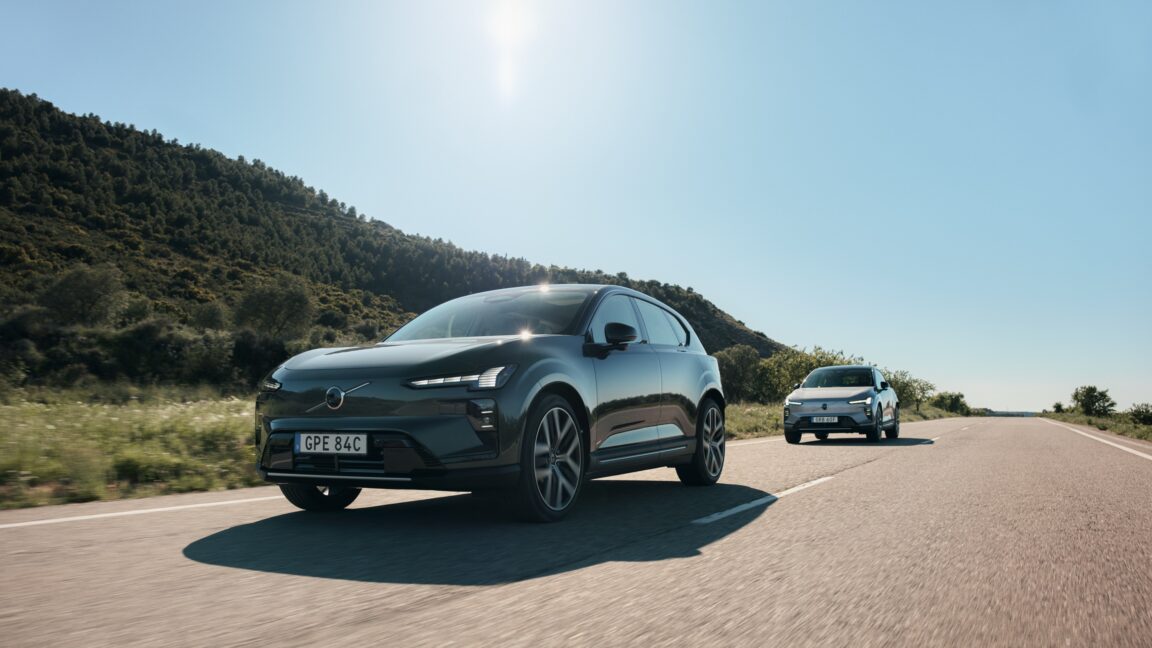
Story text Size Small Standard Large Width * Standard Wide Links Standard Orange * Subscribers only Learn more BARCELONA, Spain—Volvo unveiled its new all-electric EX60 in January with a slew of distinctions. The EX60 is the first model on the company’s all-EV SPA3 platform, a scalable base upon which Volvo plans to build a range of other vehicles.
With up to 400 miles (643 km) of range and faster charging than any other Volvo vehicle, this EV carries a lot of hopes and dreams. Volvo says it completely changed how it builds cars for the EX60, refining every stage of production. Part of the building process is called megacasting, a technique that converts molten aluminum into one lightweight piece. The model also boasts 800 V charging and cell-to-body integration, a structural load-bearing battery design that integrates battery cells directly into the vehicle’s floor and walls.
While the market may seem wishy-washy on EVs right now, at least in the United States, most automakers with EVs already in the works are plowing forward. Volvo launched the compact EX30 at the end of 2023 and discontinued it this year due to shifting conditions and tariffs, but the three-row EX90 continues the lineup alongside the new EX60. Priced at $59,795 for the entry-level P6 Plus, the 2027 EX60 ranges up to $68,745 for the P10 AWD Ultra, which is more powerful and has a longer range. Volvo says the P12, which will have even more power and range, is on the horizon.
Volvo is sticking with its minimalist interior design for the EX60.
Credit: Volvo Volvo is sticking with its minimalist interior design for the EX60.
Credit: Volvo But let’s talk about the most interesting piece: Volvo moose-proofed this EV.
Moose-proof structure Sweden’s largest land mammal is the mighty moose. According to the Alaska Department of Fish and Game , Sweden does not have the most moose globally, but it does have the highest density in the world. Overall, moose density in Scandinavia is about 3.5 times greater than in Alaska.
Volvo takes moose strikes very seriously.
Credit: Volvo Volvo takes moose strikes very seriously.
Credit: Volvo Volvo knows from experience that moose are serious traffic hazards, especially at dusk and dawn. These half-ton animals are such a danger to drivers that Volvo moose-tests every one of its models with a life-size rubber moose crash test dummy that weighs nearly 800 pounds. Yep, it’s true: Volvo ensures every car is as prepared as possible in case of a head-on collision with a massive moose.
“When a vehicle hits a moose, the bumper, engine, and built-in crumple zones of the car that are intended to absorb the majority of an impact only hit the thin legs,” explains the Wildlife Roadsharing Resource Center , a project under Canada’s Traffic Injury Research Foundation. “The full weight of the moose’s upper body instead impacts the windshield and roof of the vehicle.” To be blunt, if the body of a moose comes down hard on a windshield or the roof, the odds of passenger survival are greatly diminished. Volvo’s moose tests are just one way the automaker is promoting its safety goals, and it marked the new EX60 EV with a moose Easter egg under the side mirrors.
Volvo safety expert Isabelle Stockman says the EX60 was designed with super-strong A-pillars and a header to shield the car’s occupants from potential hazards. Including moose.
A 350 kW charger will charge the P6 and P10 from 10 to 80 percent in just 16 minutes.
Credit: Volvo A 350 kW charger will charge the P6 and P10 from 10 to 80 percent in just 16 minutes.
Credit: Volvo Anatomy of a megacasting High above the Notre Dame Cathedral in Paris, an architectural element called a flying buttress plays an important role in the soaring Gothic creation. Designed to offer vertical and lateral reinforcement, flying buttresses enable the force exerted by the roof and walls to be offloaded from the upper wall section to the ground. In a modern twist on this concept, Volvo is now megacasting aluminum alloy buttress-like structures in the new EX60’s diecast rear floor.
Megacasting, long used by Tesla, is a way to reduce weight, complexity, and environmental impact.
Six massive 6,000-ton die-casting machines dot Honda’s Anna, Ohio, plant, for instance. Toyota is also using megacasting, and Ford has turned to the technique to help it make an electric pickup truck that it can sell for $30,000.
Volvo’s design is unique to the EX60, replacing more than 100 parts in the rear floor section with a single, efficient component. The “buttresses” look like thin channels incorporated into the wheel wells, poised to withstand the forces required for support.
The EX60’s megacasting.
Kristin Shaw The EX60’s megacasting.
Kristin Shaw A closer look at the buttresses.
Kristin Shaw A closer look at the buttresses.
Kristin Shaw The EX60’s body, with the megacasting floor in place.
Kristin Shaw The EX60’s body, with the megacasting floor in place.
Kristin Shaw A closer look at the buttresses.
Kristin Shaw The EX60’s body, with the megacasting floor in place.
Kristin Shaw Volvo engineer Mats Brodin says the rear floor is cast from 50 percent recyclable aluminum collected from post-consumer materials. He describes himself as an “architect of megacasting,” further aligning the Volvo EV to building design.
The cast is primarily made of aluminum mixed with a much smaller amount of silicon and is forced into the megacast machine in roughly 90 milliseconds, Brodin says. It then takes a minute to dry. With two megacasting machines on site in its Torslanda plant, near Volvo’s headquarters in Gothenburg, Sweden, EX60s are ready to roll off the line quickly.
Volvo is using megacasting judiciously. For instance, if the car is involved in a crash and the diecast piece is damaged, it’s more likely to become scrap, as it’s not easily repairable. That’s why it makes sense for Volvo to megacast a single rear floor part rather than a larger one.
The EX60 is the first Volvo car to use megacasting, so while it feels new, the plan has been in place since at least 2022. The company invested 10 billion Swedish kronor—roughly $1.1 billion—in the manufacturing facility, including these giant megacasting pieces.
Smart battery integration and superlative one-pedal driving The EX60 will use a structural battery design akin to the one used in a BMW iX3 or a Tesla Model Y; Volvo says the EX60 will have a “cell-to-body” battery. Unlike typical EVs with heavy battery packs (like a GMC Hummer EV, for example), the EX60’s battery cells are integrated directly into its body.
Essentially, the battery pack becomes the floor of the vehicle. That offers weight and packaging efficiency and opens up more cabin space. Most importantly for an EV, it reduces weight, which improves range. It’s all part of Volvo’s new SPA3 platform, designed specifically for EVs.
During testing in and around Barcelona, Spain, the EX60 performed beautifully with one-pedal driving, improving the car’s regenerative assets. I barely touched the brakes on twisty roads outside the city, relaxing into the EV’s operational quality. I haven’t been a big fan of most one-pedal drives because so many tend to be jerky and difficult to adapt to; that’s not the case in the EX60.
The $60,000 luxury EV space is getting very crowded these days.
Volvo The $60,000 luxury EV space is getting very crowded these days.
Volvo We especially liked the EX60’s pedal calibration and one-pedal driving.
Volvo We especially liked the EX60’s pedal calibration and one-pedal driving.
Volvo The $60,000 luxury EV space is getting very crowded these days.
Volvo We especially liked the EX60’s pedal calibration and one-pedal driving.
Volvo The brain of the EX60 lies in HuginCore, Volvo’s proprietary software-defined vehicle platform and core computing system . Through HuginCore (named after a mythological Norse raven), Volvo can deliver over-the-air updates with minimal impact on customers. HuginCore is also responsible for the Google Gemini AI engine in the EX60. The AI feature allows users to have natural conversations with the car, like “Hey Google, it’s hot in the front row. Can you help?” Volvo says conversational AI is in play, so using the command “Hey Google, let’s talk” opens a dialogue that acts like an ongoing bar tab.
At the top of the line, the Volvo EX60 P10 Ultra includes a stunning 28-speaker Bowers & Wilkins blasting out 1820 watts of three-dimensional Dolby Atmos sound. The experience is immersive when playing a variety of music. I tend to like pounding rock like Rammstein and Rob Zombie, and I was impressed by the audio quality and how the music segmented across the car for full surround sound.
Those who didn’t care for the overly touchscreen-focused controls in the EX30 may not be pleased with the operational functionality of the EX60, either. Digital vent controls drive me bananas, especially living in a place like Texas. Here, you want to have a fan blasting on your face in the heat of the summer, but your eyes eventually dry out and you need to point the vents away. I don’t love that they require touchscreen intervention to do so.
Overall, the EX60 is a nice combination of lessons learned from Volvo’s other EVs. The automaker continues to innovate, developing new iterations of its designs that deliver real improvements. The newest model puts the puzzle pieces together in a way that shows Volvo is paying attention.
7 Comments